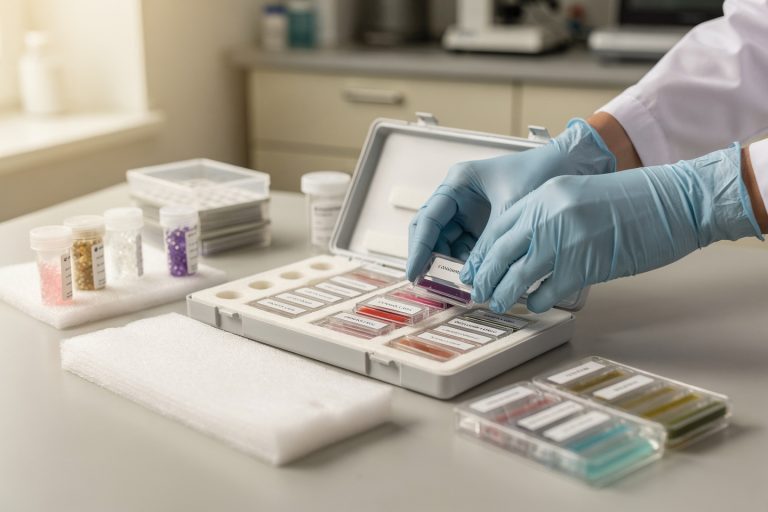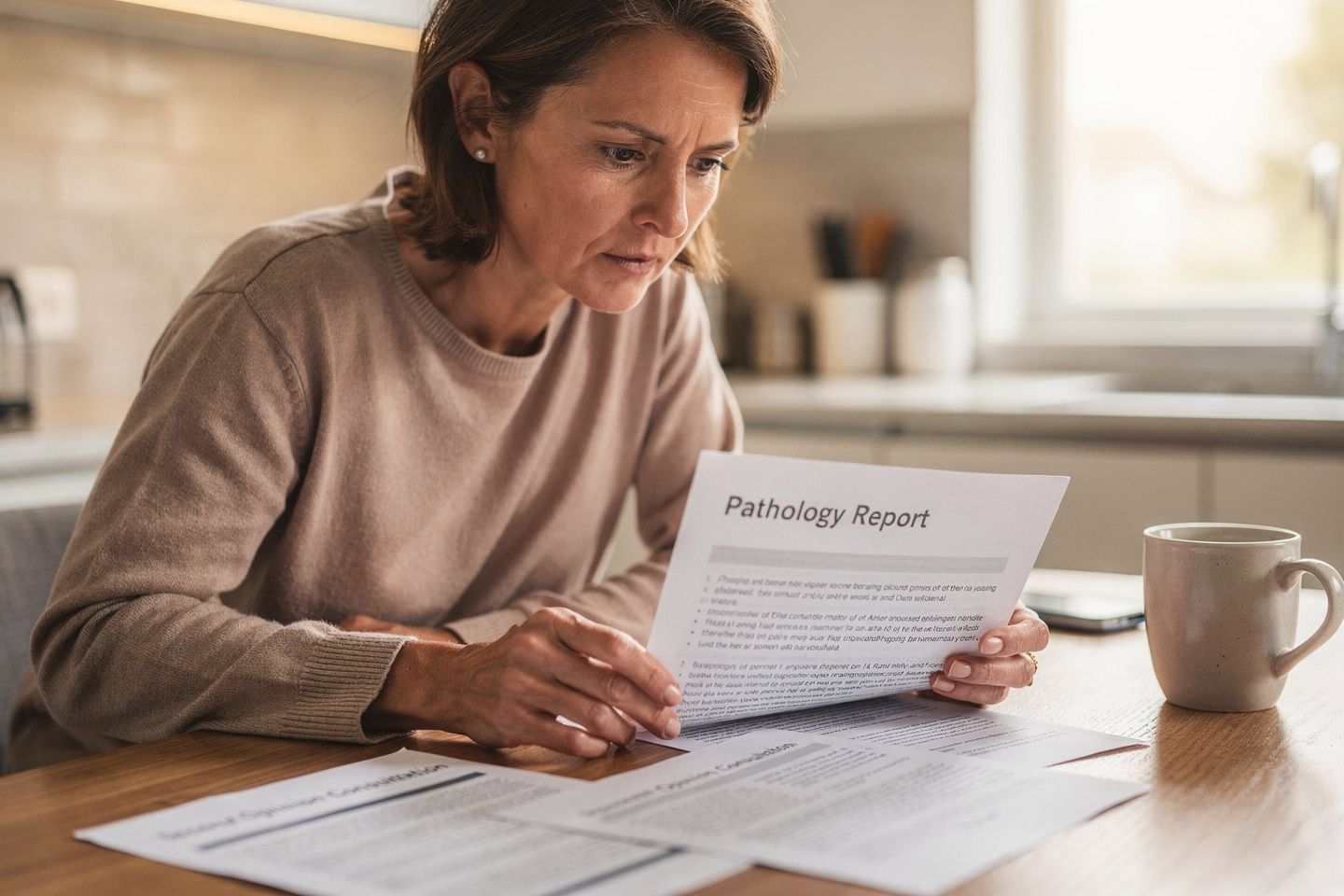
After receiving a cancer diagnosis, many patients struggle with an uncomfortable question: should I simply trust my doctors, or should I seek additional input about my pathology report? Patients sometimes worry that asking questions, requesting clarification, or seeking outside guidance may somehow signal distrust toward their healthcare team. Others fear they are being “difficult” if they want a deeper explanation of their diagnosis before moving forward with treatment.
At HONEST Pathology, we believe patients should know something very important: trusting your doctors and wanting to better understand your diagnosis are not opposing ideas. In fact, they often strengthen each other. A patient who better understands their pathology report is frequently more confident in their healthcare team, more comfortable with treatment decisions, and better prepared for conversations about surgery, chemotherapy, radiation, or ongoing follow-up care.
Why Pathology Reports Matter in Modern Cancer Care
Modern cancer care depends heavily on pathology. The pathology report identifies the cancer type, describes tumor characteristics, helps determine stage and prognosis, and guides treatment recommendations. Yet most patients never meet the pathologist who interpreted their biopsy or surgical specimen under the microscope.
Instead, patients often encounter the pathology report alone through an online portal filled with highly technical terminology that was primarily written for physicians. Words like “adenocarcinoma,” “poorly differentiated,” “lymphovascular invasion,” “positive margins,” or “metastatic carcinoma” can sound frightening and confusing without explanation. Patients naturally begin searching online for answers and wondering when they may need a second opinion immediately.
Understanding the Difference Between a Second Opinion and a Consultation
This is where understanding the difference between a formal pathology second opinion and a pathology consultation becomes extremely important. A formal pathology second opinion involves another pathologist independently reviewing the actual pathology slides and diagnostic materials. The consulting pathologist may agree with the original diagnosis, refine it, or occasionally offer a different interpretation. Formal second opinions are especially valuable in rare cancers, unusual tumor subtypes, ambiguous biopsies, borderline lesions, or diagnostically challenging cases.
There are absolutely situations where formal second opinions are medically important and appropriate. However, many patients considering second opinions are not necessarily confronting diagnostic uncertainty. More commonly, they are confronting confusion. They do not fully understand what the pathology report means, why certain findings matter, or how the diagnosis connects to treatment recommendations. The issue is often not mistrust of their doctors. The issue is lack of clarity.
What a Pathology Consultation Actually Provides
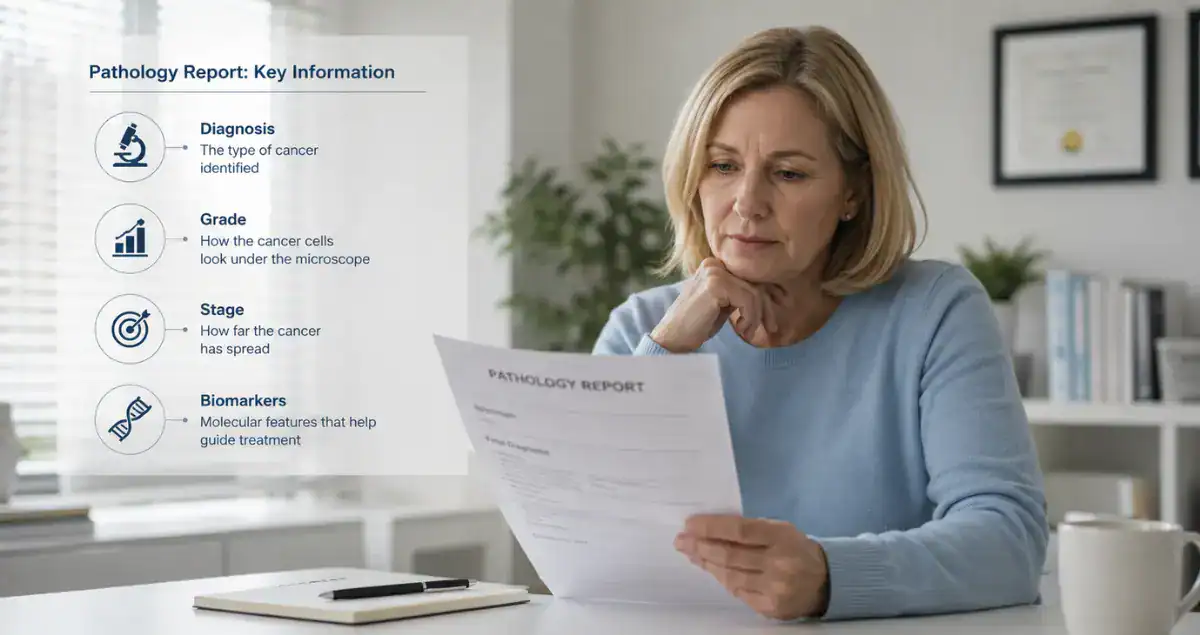
A pathology consultation is different from a formal second opinion because its primary purpose is education and understanding. At HONEST Pathology consultations, patients speak directly with a board-certified pathologist who helps explain the terminology, staging language, biomarker findings, grading systems, and diagnostic concepts already present in the report. Through these pathology consultation services, patients can better understand the diagnosis they already have rather than replacing it with a new one. This distinction matters enormously.
For example, a patient diagnosed with breast cancer may become alarmed reading “invasive ductal carcinoma, grade 2, estrogen receptor positive, HER2 negative.” A patient with colon cancer may panic over lymph node findings or staging terminology. A lung cancer patient may assume immunohistochemical stains or molecular testing indicate uncertainty when they are actually standard components of modern pathology evaluation. Without explanation, pathology language can sound far more alarming than it truly is clinically.
At HONEST Pathology, we help patients understand what these findings actually mean in practical, understandable terms. Patients often leave consultations realizing that the diagnosis itself is not confusing to pathologists or oncologists — it only felt confusing because no one had translated the medical language clearly. That understanding often increases confidence in the treating physicians rather than undermining it.
How Better Understanding Improves Patient Confidence
One of the most common things patients say after a pathology consultation is that they finally feel able to follow conversations with their healthcare team. They understand why certain treatments are being recommended. They know which findings are most important. They feel more comfortable asking targeted questions and participating actively in decision-making. In other words, education improves trust.
This is especially important because modern healthcare appointments often move very quickly after a cancer diagnosis. Patients may meet surgeons, oncologists, radiologists, and treatment coordinators in rapid succession while simultaneously processing enormous emotional stress. Even excellent physicians may have limited time to fully explain every pathology detail during those appointments. As a result, patients frequently leave with lingering confusion despite receiving excellent medical care.
Seeking Clarification Does Not Mean Distrust
Seeking clarification through a pathology consultation does not mean patients distrust their doctors. It means they want to better understand highly technical information that may profoundly affect their lives. At HONEST Pathology, we believe understanding should be viewed as part of good cancer care, not as a sign of skepticism or conflict. Importantly, pathology consultations can also help clarify when a formal second opinion might actually be beneficial. During the consultation process, patients may learn whether their diagnosis appears straightforward or whether unusual features suggest additional review could provide value.
Rare tumors, ambiguous findings, conflicting reports, unusual immunohistochemical patterns, or borderline lesions may absolutely justify formal outside review by major cancer centers or subspecialty pathologists. But many patients ultimately discover that what they truly needed first was explanation, context, and reassurance rather than immediately pursuing another formal diagnostic review.
The Financial Considerations of Second Opinions
This distinction can also have significant financial implications. Formal pathology second opinions at large academic institutions can become expensive, particularly when additional testing, consultations, travel, or out-of-network care are involved. Insurance coverage through Medicare, Blue Cross Blue Shield, UnitedHealthcare, or Aetna may help in some cases, but patients often still face deductibles, coinsurance, referral requirements, or substantial out-of-pocket costs.
A pathology consultation at HONEST Pathology is often a far more cost-effective first step for patients primarily seeking understanding and peace of mind. Rather than immediately entering a complicated second-opinion process, patients can first gain clarity from a board-certified pathologist who explains the report honestly and helps determine whether further review is likely to add meaningful value. This approach often reduces anxiety dramatically.
Understanding Your Diagnosis Can Strengthen Trust
Patients deserve to feel informed without feeling adversarial. They should feel empowered to ask questions without worrying that curiosity somehow signals distrust. Trusting your doctors is a good thing. Most cancer diagnoses are made carefully and accurately by highly trained physicians working within multidisciplinary teams. But trusting your doctors does not mean you must navigate confusing pathology terminology alone. In fact, patients who understand their diagnosis more clearly are often better positioned to trust their healthcare team confidently because they understand the reasoning behind the recommendations being made.
At HONEST Pathology, we believe pathology consultations strengthen patient confidence, improve communication, and help patients feel more informed throughout the cancer journey. If you have received a pathology report and feel overwhelmed by the terminology, uncertain about the findings, or unsure whether you need a formal second opinion, HONEST Pathology offers consultations designed to help patients better understand their diagnosis, ask more informed questions, and gain peace of mind. Because understanding your diagnosis should build confidence — not fear.