It can be confusing—and sometimes unsettling—when different parts of your medical evaluation don’t seem to agree. You might be told that your imaging looked concerning, but your biopsy came back benign. Or the opposite may happen, where imaging seems reassuring but pathology suggests something more serious.
If you find yourself in this situation, you’re not alone. At Honest Pathology, we regularly work with patients who are trying to understand exactly this kind of mismatch. The good news is that these situations are not uncommon, and they can almost always be clarified with the right context.
Why Imaging and Pathology Are Different
Imaging and pathology are both essential tools, but they look at the body in very different ways.
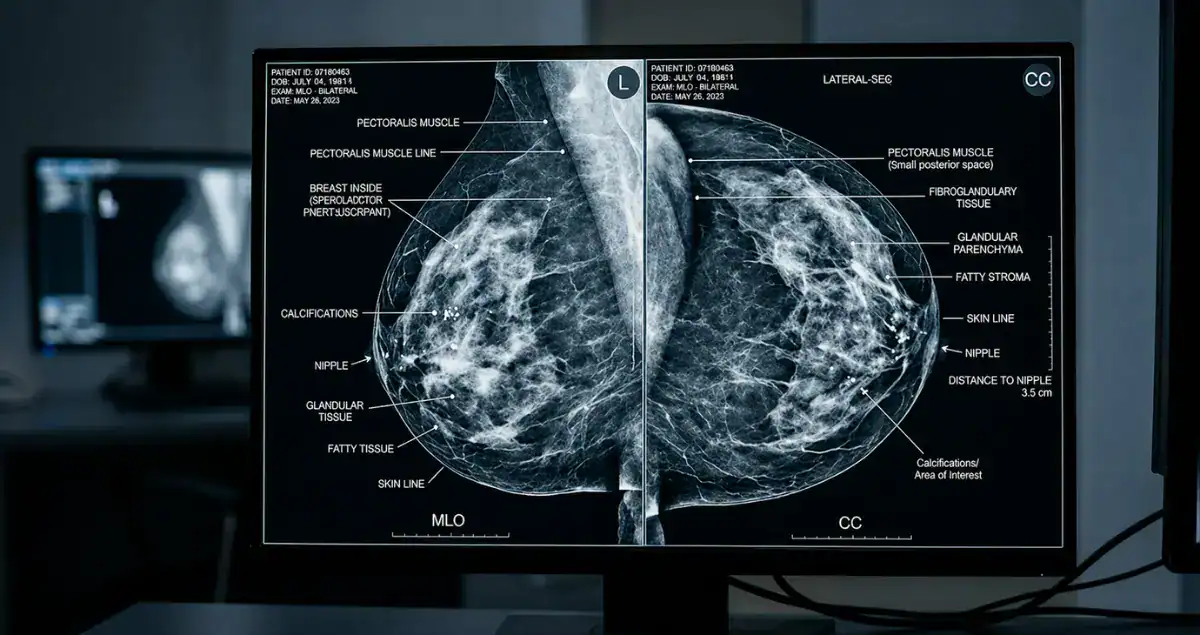
Imaging studies like CT scans, MRIs, and ultrasounds provide a broad, visual overview. They show the size, shape, and location of structures in the body. Doctors use them to identify areas that look unusual or out of place.
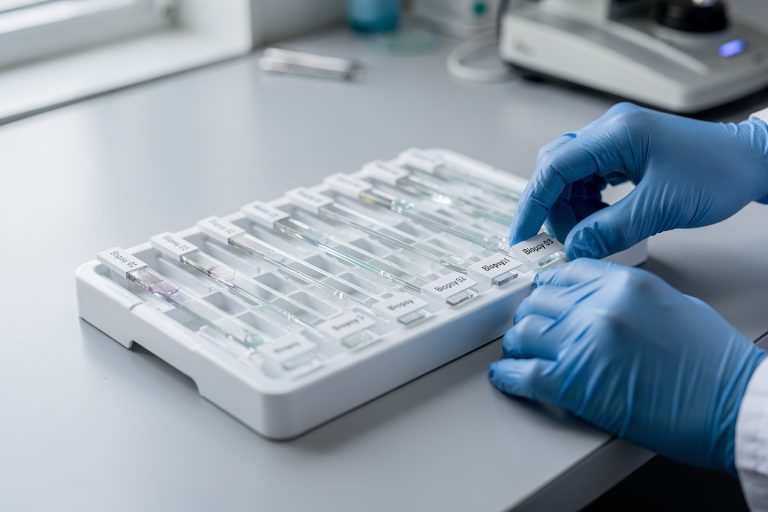
Pathology, on the other hand, examines actual tissue under a microscope. It looks at individual cells and how they are behaving. This allows for a much more detailed and definitive assessment of what something truly is.
Because these tools operate at different levels, they don’t always align perfectly.
When Imaging Looks Concerning but the Biopsy Is Benign
One of the most common scenarios is when imaging suggests something abnormal, but the biopsy result comes back as non-cancerous.
There are several reasons this can happen. Sometimes imaging findings are nonspecific, meaning they can be caused by a range of conditions, including inflammation, scarring, or benign growths.
In other cases, the biopsy may not have sampled the exact area that appeared most suspicious on imaging. This is known as a sampling issue and can occur even when the procedure is performed correctly.
It’s also possible that the abnormality seen on imaging is real, but not cancerous. Many benign conditions can mimic cancer on scans.
When Imaging Looks Reassuring but Pathology Raises Concern
The reverse situation can also occur, where imaging appears relatively normal, but the biopsy reveals something more significant.
This can happen because imaging has limits in detecting very small or early changes. A lesion may not stand out clearly on a scan but still show important features under the microscope.
In these cases, pathology often provides the more definitive answer, since it is based on direct examination of the tissue.

Why This Mismatch Matters
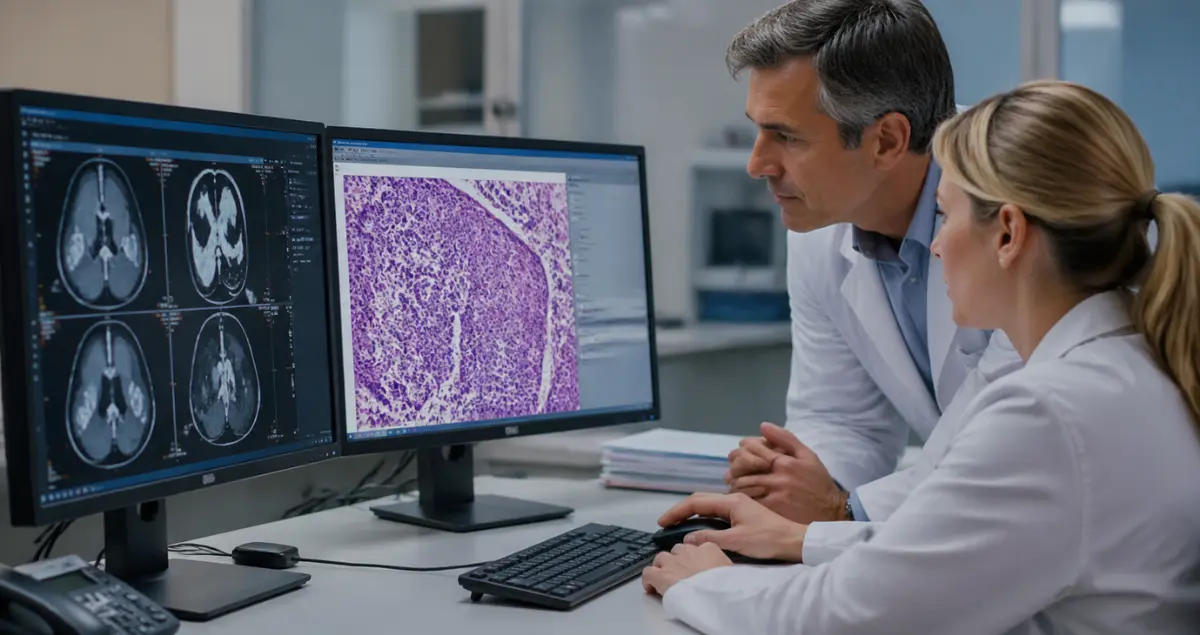
When imaging and pathology don’t match, it creates uncertainty. Doctors may use the term “discordance” to describe this situation.
This doesn’t mean something has gone wrong, but it does mean that the findings need to be looked at more closely. Additional steps may be recommended, such as repeat imaging, another biopsy, or complete removal of the area in question.
The goal is to make sure that the diagnosis truly reflects what’s happening in your body.
The Role of Clinical Context
One of the most important factors in resolving these situations is clinical context.
Doctors consider your symptoms, medical history, physical exam findings, and risk factors alongside both the imaging and pathology results. When all of these pieces are viewed together, the picture often becomes clearer.
A mismatch between imaging and pathology is not a final answer—it’s a signal to take a closer look.
The Questions Patients Often Have
When faced with conflicting results, most people want to know which test to trust.
The answer depends on the situation. Pathology is often considered the gold standard because it involves direct tissue evaluation, but it is still limited by what was sampled. Imaging provides a broader view but may not capture microscopic detail.
Patients also want to know whether something was missed. In some cases, that is a possibility, which is why follow-up is so important. In many cases, however, the mismatch reflects the complexity of how different conditions appear rather than an error.
Another common question is what happens next. The answer varies, but it usually involves gathering more information to resolve the discrepancy.
What You Can Do Next
If your imaging and pathology results don’t align, the most important step is to make sure you fully understand both.
This is where many patients feel stuck. They have reports filled with medical terminology, but no clear explanation of how the pieces fit together.
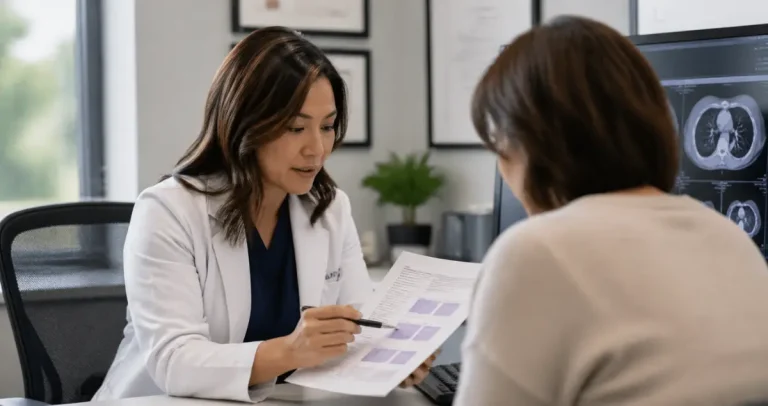
At Honest Pathology, we help bridge that gap by reviewing your pathology report with you in a way that actually makes sense through expert pathology consultation. When you understand what the findings mean, how certain they are, and clinical correlation advised meaning, you’re in a much stronger position to move forward.
Turning Uncertainty Into Clarity
A mismatch between imaging and pathology can feel frustrating, but it’s also an opportunity to take a closer, more thoughtful look at your diagnosis.
With the right guidance, what initially feels like conflicting information can become a clearer, more complete understanding of your situation.
If you’re navigating this kind of uncertainty, consider scheduling a consultation with Honest Pathology. Being informed, prepared, and confident in your understanding can make all the difference in how you approach your care and your next steps.