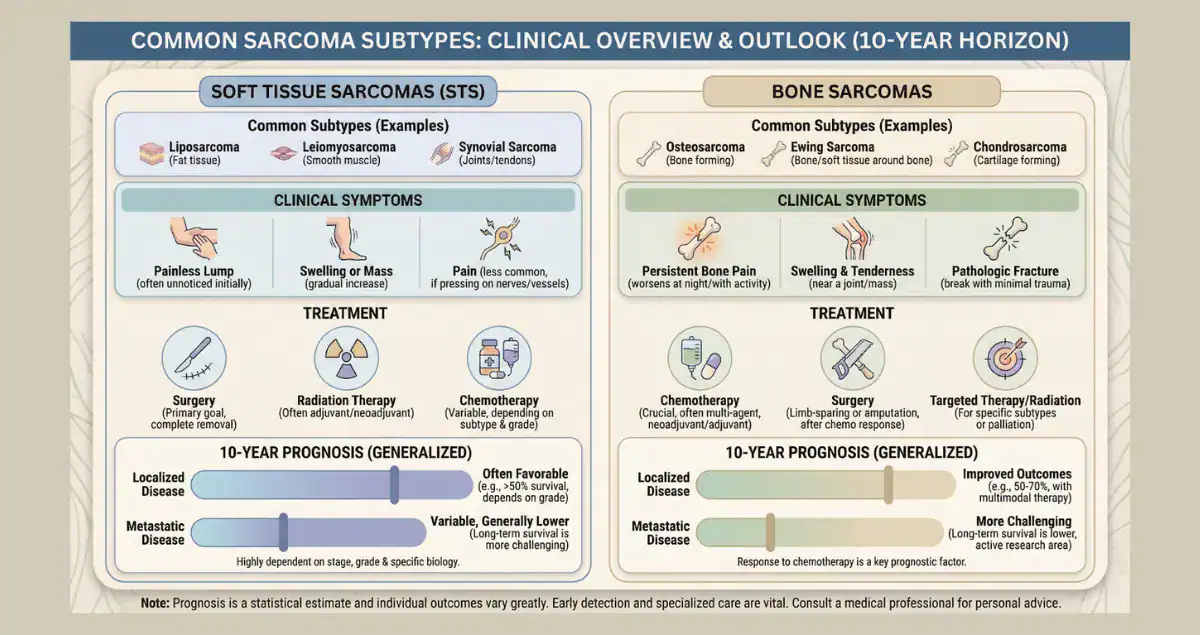
Sarcoma is one of the rarest and most complex forms of cancer, arising in the body’s connective tissues including muscles, fat, blood vessels, nerves, tendons, and bones. With over 50 recognized subtypes of soft tissue sarcoma and several primary bone sarcomas, each type behaves differently in terms of growth rate, tendency to spread, and response to treatment. Many patients newly diagnosed with sarcoma search online for clear answers about their specific subtype, symptoms, causes, treatment options, and prognosis. Understanding these details can reduce fear and help individuals take an active role in their care. Honest Pathology provides expert pathology consultations that deliver clear, accessible explanations of diagnosis reports, empowering patients with the knowledge needed to advocate effectively for personalized treatment.
What Is Sarcoma and How Does It Differ from Other Cancers?
Sarcoma originates from mesenchymal cells in the supportive and connective tissues of the body, in contrast to the more common carcinomas that develop from epithelial cells lining organs. This fundamental difference means sarcomas require specialized diagnostic techniques and treatment strategies tailored to their unique biology. Sarcomas account for less than one percent of adult cancers but represent about 15 percent of childhood cancers. They can occur at any age, though certain subtypes predominate in children and young adults while others appear more often in middle-aged or older individuals.
For most patients, the exact cause of sarcoma remains unknown. However, recognized risk factors include prior radiation exposure, certain inherited genetic syndromes such as Li-Fraumeni syndrome or neurofibromatosis, and chronic lymphedema in specific cases. Chemical exposures like vinyl chloride or arsenic have also been linked in rare instances. Early symptoms often include a painless or mildly tender lump that grows over time, bone pain, swelling, or unexplained fractures. Any lump larger than five centimeters, deep-seated, rapidly enlarging, or associated with pain warrants prompt medical evaluation with imaging and biopsy.
The critical first step in managing sarcoma is obtaining an accurate pathological diagnosis. Subtle differences visible only under the microscope or through molecular testing can dramatically influence treatment decisions and outcomes. This is where specialized pathology consultations become invaluable, translating complex technical findings into understandable insights that help patients feel informed rather than overwhelmed.
Leiomyosarcoma: One of the Most Common Soft Tissue Sarcomas in Adults
Leiomyosarcoma ranks among the most frequently diagnosed soft tissue sarcomas in adults, arising from smooth muscle cells found in the walls of blood vessels and hollow organs. It commonly develops in the uterus, abdomen (retroperitoneum), or large veins of the limbs. Patients often discover a gradually enlarging mass that may cause discomfort depending on its location and pressure on nearby structures.
A frequent online search question is whether leiomyosarcoma recurs after surgery and whether additional therapies like radiation or chemotherapy will be necessary. The answer depends on several factors: tumor grade, size, depth, and the completeness of surgical removal with wide margins. Uterine leiomyosarcoma may behave differently from retroperitoneal cases due to hormonal influences or anatomical constraints. Expert pathology consultation helps clarify these nuances by confirming the diagnosis and assessing microscopic features that guide prognosis and treatment intensity.
Liposarcoma: The Fatty Tissue Sarcoma with Multiple Variants
Liposarcoma, originating from fat cells, is another leading soft tissue sarcoma subtype and includes several distinct forms. Well-differentiated liposarcoma tends to grow slowly in the deep abdomen or thighs and can resemble a benign lipoma on scans, yet it carries a risk of local recurrence if not excised with adequate margins. Dedifferentiated liposarcoma evolves into a more aggressive, higher-grade tumor with greater potential for distant spread, often to the lungs.
Myxoid and round-cell liposarcomas frequently affect younger adults in the limbs and feature a characteristic gelatinous appearance linked to a specific gene fusion. Pleomorphic liposarcoma remains the rarest and most aggressive variant. Patients commonly ask if the tumor’s fatty origin means diet or weight loss can influence its behavior. While healthy lifestyle choices support overall resilience during treatment, the drivers of liposarcoma are molecular and genetic rather than dietary. Detailed pathology analysis identifies the precise subtype, informing surgical planning and decisions about adjuvant therapies.
Undifferentiated Pleomorphic Sarcoma: An Aggressive Diagnosis of Exclusion
Undifferentiated pleomorphic sarcoma (UPS), formerly called malignant fibrous histiocytoma, is one of the most common soft tissue sarcomas, particularly in older adults. It earns its name because the tumor cells appear highly abnormal and lack features pointing to a more specific lineage. UPS often arises in the limbs or retroperitoneum and grows rapidly, sometimes reaching large sizes before detection.
Patients frequently search for information on its aggressiveness compared to other sarcomas and the intensity of required treatment. Because UPS is diagnosed after ruling out other possibilities, expert pathology review is especially important to confirm the classification and detect any molecular markers that might suggest targeted therapy options or clinical trial eligibility. Treatment typically involves surgery, often combined with radiation for larger or higher-grade tumors, with chemotherapy considered in select cases.
Gastrointestinal Stromal Tumor (GIST): A Sarcoma Transformed by Targeted Therapy
Gastrointestinal stromal tumor (GIST) arises from the interstitial cells of Cajal in the digestive tract, most often in the stomach or small intestine. Many GISTs are discovered incidentally during procedures for other issues, while others cause bleeding, pain, or obstruction. What sets GIST apart is the dramatic impact of targeted therapies like imatinib, which have converted a once-difficult malignancy into one with highly effective medical management for many patients.
A common patient question concerns mutations in KIT or PDGFRA genes, as these molecular details directly predict response to specific drugs and help anticipate potential resistance. Pathology consultation that includes mutational testing provides the clarity needed to select the best treatment sequence and plan long-term monitoring.
Osteosarcoma: The Most Common Primary Bone Sarcoma
Osteosarcoma predominantly affects adolescents and young adults during rapid bone growth, most often around the knee in the distal femur or proximal tibia. Classic symptoms include persistent pain that worsens at night or with activity, along with swelling or a palpable mass. Modern treatment combines neoadjuvant chemotherapy, wide surgical resection (often with limb-sparing techniques), and adjuvant chemotherapy. Survival rates for localized disease now exceed 60 percent in many centers.
Patients and families often ask why chemotherapy is given both before and after surgery. The preoperative phase shrinks the tumor and treats microscopic disease, while the percentage of tumor necrosis observed in the respected specimen by pathologists serves as a key prognostic indicator. Specialized pathology evaluation is essential for accurately assessing treatment response.
Ewing Sarcoma: A Small Round Cell Tumor of Bone and Soft Tissue
Ewing sarcoma primarily strikes children, adolescents, and young adults and is driven by a characteristic EWSR1 gene rearrangement. It can arise in bone or soft tissues, commonly in the pelvis, chest wall, or extremities. Symptoms may include pain, swelling, and sometimes fever or weight loss that initially mimic infection.
Treatment involves intensive multi-agent chemotherapy, local control with surgery or radiation, and continued systemic therapy. Prognosis has improved with contemporary protocols, though metastatic disease at diagnosis remains challenging. Molecular confirmation of the translocation through pathology consultation ensures diagnostic accuracy and opens avenues for risk-adapted therapies.
Synovial Sarcoma: A Misleading Name with Distinct Molecular Features
Synovial sarcoma typically affects young adults near large joints in the extremities, though it does not actually originate from synovial tissue. It is defined by the SS18-SSX gene fusion. These tumors may grow slowly or cause pain and joint dysfunction. Because late recurrences can occur years after initial treatment, long-term surveillance is crucial. Pathology consultation confirming the fusion and grading helps tailor follow-up and identify candidates for investigational therapies.
Answering the Most Common Sarcoma Questions
Patients searching for sarcoma information repeatedly ask several key questions. How does sarcoma differ from other cancers and why see specialists? Sarcomas are rare, so multidisciplinary teams at high-volume centers provide the best expertise in surgery, radiation, medical oncology, and radiology.
What prompts medical attention? A new lump larger than five centimeters, deep to the fascia, growing, or painful deserves evaluation. Bone pain or unexplained fractures also warrant investigation.
How is sarcoma staged and graded? Grading reflects microscopic aggressiveness, while staging considers size, depth, and metastasis (usually to lungs). These factors strongly influence prognosis. Pathology consultations help patients understand their personal stage and grade in practical terms.
What treatments are used? Surgery with negative margins is the cornerstone when possible, often supplemented by radiation for local control. Chemotherapy is critical for chemosensitive subtypes like Ewing sarcoma and certain high-grade tumors. Targeted therapies have revolutionized GIST and show promise elsewhere. Clinical trials offer additional options for those with specific molecular profiles.
What is the prognosis? Survival varies widely by subtype, size, grade, stage, and treatment response. Some low-grade sarcomas are cured by surgery alone, while aggressive cases require multimodal approaches. Five-year survival statistics provide general guidance but must be individualized. Honest Pathology’s consultations bridge the gap between technical reports and real-world meaning, helping patients interpret these details confidently.
Additional concerns include side effects of treatment, rehabilitation, nutrition, emotional support, and whether genetic testing is appropriate, especially with young-onset or family history of cancer.
How Pathology Consultations Empower Sarcoma Patients
In a disease as heterogeneous as sarcoma, precise diagnosis drives every decision. Subtle histologic or molecular features can shift a treatment plan from surgery alone to intensive chemotherapy or targeted agents. Honest Pathology offers dedicated pathology consultations that go beyond standard reports, providing patients with clear explanations of their specific subtype, its implications, and the reasoning behind recommended approaches.
By understanding their diagnosis in depth, patients can ask more informed questions during oncology visits, evaluate treatment options thoughtfully, and participate actively in decisions affecting their future. Knowledge reduces anxiety and fosters a sense of control in what can otherwise feel like an overwhelming journey.
Sarcoma’s complexity, from leiomyosarcoma and liposarcoma to osteosarcoma, Ewing sarcoma, and beyond, highlights why accurate pathology interpretation matters so profoundly. Through expert consultations, patients gain the empowerment needed to navigate care with confidence, turning a rare and challenging diagnosis into a path managed with clarity and partnership. Whether facing questions about symptoms, subtypes, treatment, or long-term outlook, accessing specialized pathology insights early equips individuals to advocate effectively and focus on what matters most: moving forward with informed hope.