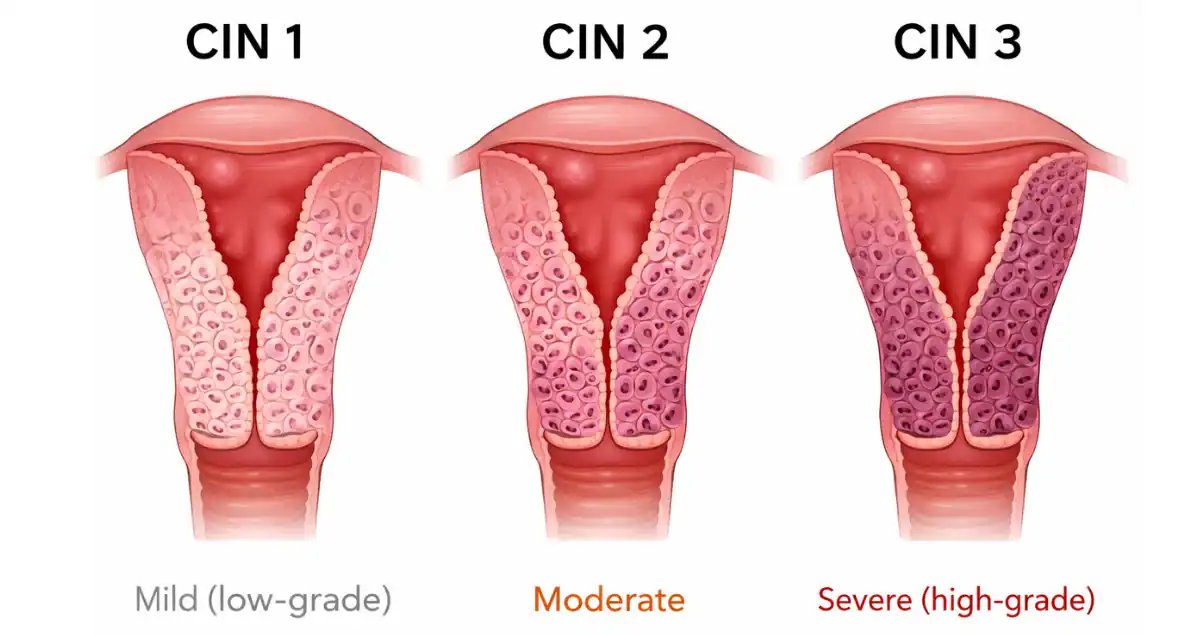
Cervical intraepithelial neoplasia is a term used to describe precancerous changes in the cells of the cervix. These changes are detected most commonly through cervical screening tests such as the Pap smear. Cervical intraepithelial neoplasia does not mean that cancer is present, but it does indicate that cervical cells have developed abnormalities that require monitoring or, in some cases, treatment.
At Honest Pathology, we help patients interpret pathology and screening results related to cervical health so they can better understand what their diagnosis means and what steps may come next.
What Is Cervical Intraepithelial Neoplasia?
Cervical intraepithelial neoplasia, often abbreviated as CIN, refers to abnormal growth of cells on the surface lining of the cervix. These changes are usually caused by persistent infection with certain strains of human papillomavirus.
CIN is classified into three grades based on how deeply abnormal cells extend into the cervical epithelium.
CIN 1 represents mild abnormality, where abnormal cells are limited to the lower one-third of the cervical lining. This level is often associated with transient viral infection and may regress spontaneously without treatment.
CIN 2 represents moderate dysplasia, where abnormal cells occupy up to two-thirds of the epithelial thickness. This category is considered a higher risk lesion and may require closer surveillance or treatment depending on patient factors.
CIN 3 represents severe dysplasia or carcinoma in situ, where abnormal cells involve most or all of the epithelial layer but have not invaded deeper tissues. Although CIN 3 is not cancer, it is considered the most advanced precancerous stage and carries the highest risk of progression if untreated.
The progression from CIN 1 to CIN 3 does not occur in every patient, and many lesions remain stable or regress, especially in younger individuals.
Pap Smear Results and Cervical Intraepithelial Neoplasia
Pap smear screening is one of the most effective tools for detecting early cervical cell abnormalities. The Pap test evaluates cervical cells collected during a pelvic examination and identifies structural changes that may indicate dysplasia.
Pap smear results may include terms such as atypical squamous cells of undetermined significance, low-grade squamous intraepithelial lesion, or high-grade squamous intraepithelial lesion.
Low-grade results are often associated with CIN 1 changes and may reflect early or mild dysplasia. High-grade results are more closely associated with CIN 2 or CIN 3 and may require further diagnostic evaluation.
An abnormal Pap smear does not automatically mean that CIN is present. Additional testing, such as HPV testing or cervical biopsy, may be recommended to confirm the diagnosis.
Pap smear screening is valuable because it detects precancerous changes before symptoms develop. Cervical intraepithelial neoplasia often does not produce noticeable symptoms in early stages.
Risk of Progression to Cervical Cancer
One of the most important aspects of cervical intraepithelial neoplasia is understanding the risk of progression.
CIN 1 has the lowest risk of progressing to invasive cervical cancer. Many CIN 1 lesions resolve spontaneously as the immune system clears the underlying viral infection.
CIN 2 carries a moderate risk of progression, though some lesions may still regress, particularly in younger patients.
CIN 3 has the highest likelihood of progression if left untreated because abnormal cells occupy most of the epithelial thickness. However, progression from CIN 3 to invasive cancer usually occurs slowly over several years, allowing time for detection and intervention.
Regular follow-up screening and treatment when indicated are highly effective in preventing cervical cancer development.
Treatment and Management Options
Management of cervical intraepithelial neoplasia depends on lesion grade, patient age, reproductive considerations, and overall health.
Observation may be appropriate for low-grade lesions such as CIN 1, particularly in younger patients because spontaneous regression is possible.
Treatment is more commonly recommended for CIN 2 and CIN 3 lesions.
Common treatment methods include excisional procedures such as loop electrosurgical excision procedure or cold knife conization. These procedures remove abnormal tissue while preserving as much healthy cervical tissue as possible.
The goal of treatment is complete removal of precancerous cells and prevention of progression to invasive disease.
Follow-Up After Diagnosis or Treatment
Follow-up care is essential after diagnosis of cervical intraepithelial neoplasia.
Patients typically undergo repeat cervical screening at intervals determined by lesion grade, treatment status, and age.
More frequent surveillance may be recommended after treatment because recurrence of cervical dysplasia is possible.
Human papillomavirus testing is often incorporated into follow-up protocols because persistent viral infection increases the likelihood of recurrent abnormalities.
At Honest Pathology, emphasis is placed on understanding pathology findings so that patients can make informed decisions about ongoing monitoring.
Factors That Influence Risk
Several factors can influence the development and progression of cervical intraepithelial neoplasia.
Persistent infection with high-risk human papillomavirus strains is the most significant factor.
Other contributors include smoking, immune suppression, long-term hormonal influences, and lack of regular cervical screening.
Vaccination against high-risk human papillomavirus strains has been shown to significantly reduce the incidence of cervical dysplasia.
Lifestyle factors and preventive healthcare play important roles in reducing risk.
Symptoms and Detection
Cervical intraepithelial neoplasia usually does not cause symptoms in early stages.
Many cases are detected only through routine Pap smear screening.
When symptoms do occur, they may include abnormal vaginal bleeding, bleeding after intercourse, or unusual discharge. These symptoms are not specific to CIN but should always be evaluated by a healthcare provider.
Early detection through screening remains the most effective strategy for prevention of cervical cancer.
Prognosis and Long-Term Outlook
The prognosis for cervical intraepithelial neoplasia is generally excellent when abnormalities are detected and managed appropriately.
Most low-grade lesions either remain stable or regress.
Even high-grade lesions can be treated effectively when identified early.
The primary goal of cervical screening programs is prevention of invasive cervical cancer through detection and treatment of precancerous changes.
Long-term outlook depends on adherence to follow-up care, treatment effectiveness, and management of underlying viral infection.
Understanding Pathology Reports
Pathology reports may describe cervical intraepithelial neoplasia using descriptive terminology that can seem complex.
Patients reviewing their reports should focus on lesion grade, margin status if a procedure was performed, and recommendations for follow-up.
At Honest Pathology, we emphasize translating microscopic findings into practical information that helps patients understand their condition.
The Bottom Line
Cervical intraepithelial neoplasia represents precancerous cellular changes in the cervix rather than invasive cancer. The condition is commonly detected through Pap smear screening and confirmed through biopsy when necessary.
CIN is divided into three grades reflecting the severity of cellular abnormality. Low-grade lesions often regress spontaneously, while high-grade lesions may require treatment to prevent progression.
Regular screening, HPV prevention strategies, and appropriate follow-up care are the most effective ways to reduce the risk of cervical cancer.
Understanding cervical intraepithelial neoplasia helps patients interpret Pap smear results and pathology findings with greater clarity. At Honest Pathology, the goal is to provide clear explanations that support informed healthcare decisions and long-term cervical health.